
A CiteShare Business Story
Black Americans possess enormous collective buying power. But buying power and ownership power are not the same thing.
Every day, money enters Black communities, passes through consumers' hands, and often leaves to businesses, financial institutions, landlords, platforms, and corporations owned elsewhere.
So what if we built technology designed to interrupt that pattern?
What if the Black dollar had somewhere to stay?
The Idea: Afro-Coin
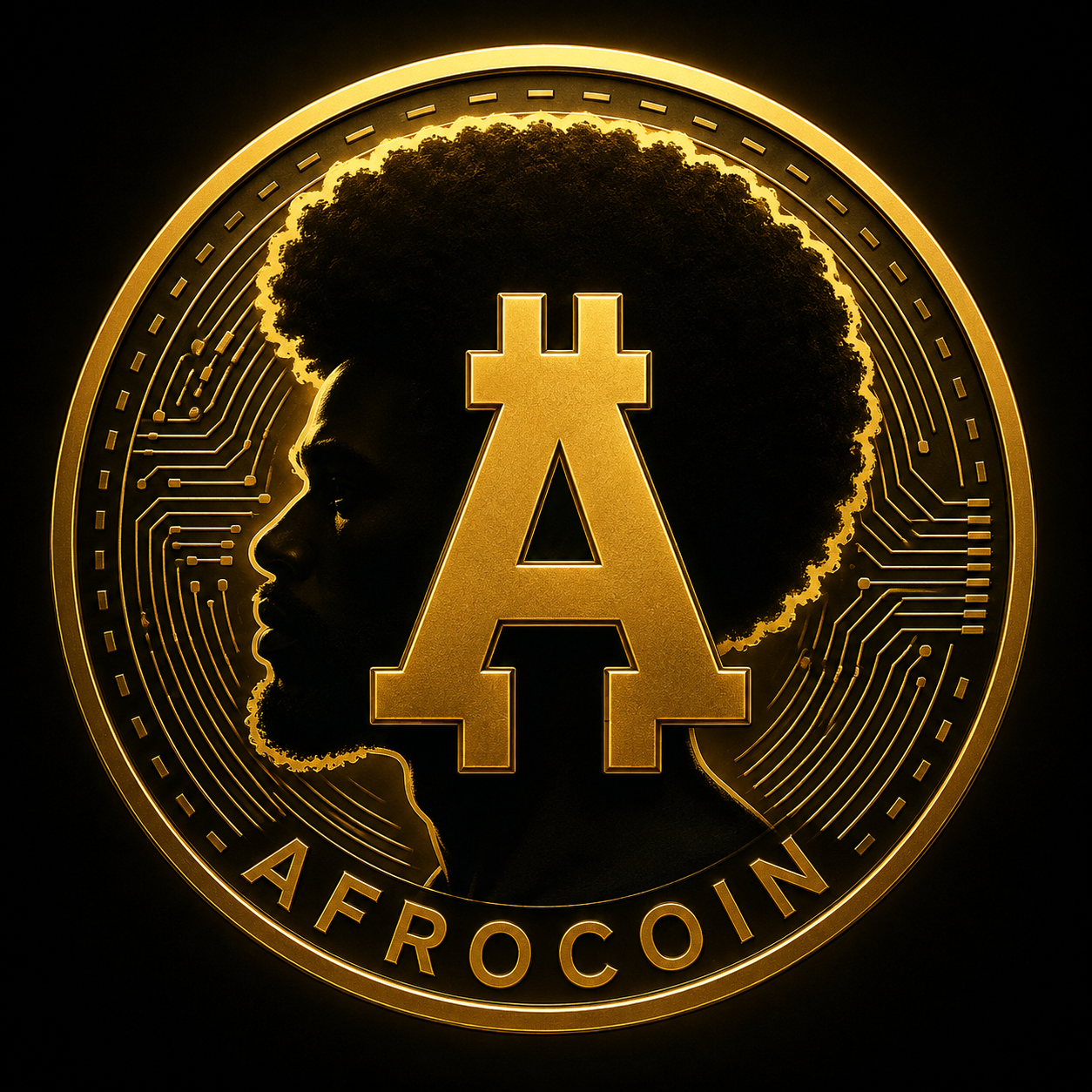
Afro-Coin is an idea for a digital currency and financial ecosystem designed to strengthen Black-owned businesses and increase the circulation of money within local Black communities.
Imagine someone purchasing Afro-Coin with ordinary U.S. dollars and then using it at participating Black-owned businesses in their neighborhood.
The restaurant accepts it.
The barber accepts it.
The grocery store accepts it.
The contractor accepts it.
The accountant accepts it.
And instead of the economic relationship ending with a single purchase, technology helps connect those transactions into a larger local economic network.
But the bigger idea isn't the coin.
It's the network.
From "Buy Black" to "Build Black"
Buying from Black-owned businesses is important. But what if technology could take us further?
Could a digital financial network help communities pool some of their resources to create, finance, purchase, and expand businesses themselves?
Instead of asking only:
How can we get people to buy from more Black businesses?
Afro-Coin asks:
How could a community use its collective spending power to create more Black business owners?
A neighborhood might identify something it needs—a grocery store, restaurant, childcare center, pharmacy, technology company, housing development, or other enterprise—and organize capital around creating it.
Business by business, the objective changes from greater participation in the local economy to greater ownership of the local economy.
Local First. National Eventually.
Afro-Coin could begin with one community.
For me, that community is Far Rockaway, New York.
What happens if we map where local dollars are going, identify gaps in Black local ownership, connect residents and entrepreneurs, and experiment with technology that encourages more money to remain in the community?
Then imagine connecting successful local networks.
An Afro-Coin earned or purchased in Far Rockaway might eventually be usable at participating Black-owned businesses in Atlanta, Chicago, Baltimore, Detroit, Los Angeles, Houston, or anywhere else in the country.
A local economic experiment could become a national network of locally owned economies.
More Than Cryptocurrency
Afro-Coin may ultimately not even be primarily about cryptocurrency.
The most interesting question is what happens when we combine the most powerful technologies available:
Artificial intelligence + fintech + social media + digital currency + community organizing + storytelling.
AI might help identify missing businesses and investment opportunities.
Fintech could make collective saving and investing easier.
Social technology could connect consumers, entrepreneurs, investors, mentors, and communities.
Storytelling could introduce the people behind local businesses and give residents a reason to care about whether those businesses succeed.
And a digital currency, token, rewards system, or another financial mechanism could encourage money to circulate through that network.
The technology should follow the problem—not the other way around.
A Black AARP or Chamber of Commerce for the Digital Age?
Perhaps Afro-Coin belongs inside something even larger.
What if there were a national digital membership organization combining some of the functions of a Chamber of Commerce, AARP, social network, and fintech platform—but organized around Black economic advancement?
It could connect Black businesses with customers.
Connect entrepreneurs with capital.
Connect communities with investment opportunities.
Provide financial education and consumer protections.
Use collective membership to negotiate benefits.
And use technology to transform millions of individual economic decisions into coordinated economic power.
Perhaps the answer to financial racism isn't solely financial technology.
Perhaps it is social technology.
The Experiment
Afro-Coin is not being presented here as a finished solution.
It is a question worth exploring:
Can we use the most advanced technologies of our time to help solve one of America's oldest economic problems?
And an even more provocative question:
Could Black communities pool enough of their existing economic power to increasingly own the places where they live—one business at a time?
CiteShare exists to explore ideas before all the answers are known.
So let's explore this one.
What would Afro-Coin need to become for you to use it?
What would make you trust it?
Could it actually help a neighborhood create more locally owned businesses?
And if we started with one community, could we eventually connect thousands of them?
This is a CiteShare Business Story—an idea presented for discussion, research, criticism, collaboration, and perhaps, eventually, creation.